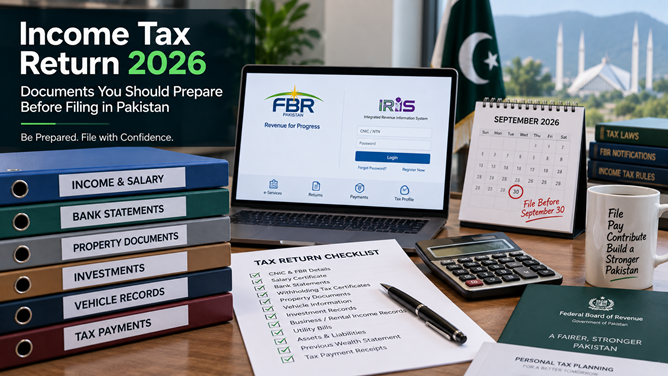
If you’re preparing to file your income tax return for Tax Year 2026 in Pakistan, collecting your documents before opening the FBR IRIS portal can save considerable time and reduce filing mistakes.
For individuals and Associations of Persons (AOPs), the normal income tax return filing deadline is September 30. Taxpayers filing for Tax Year 2026 should therefore start gathering their income, tax, banking, property and asset records as early as possible.
The exact documents you need depend on whether you’re salaried, self-employed, running a business, earning rental income, holding investments or receiving income from several sources.
Here’s a practical checklist to help you prepare.
1. CNIC and FBR Registration Details
Start with your basic identification and FBR account information.
Keep the following available:
- CNIC
- NTN or registration details, where applicable
- IRIS login information
- Current mobile number
- Current email address
Make sure your registration information on FBR’s system is correct before you start filing.
2. Salary Certificate
If you’re a salaried employee, obtain your salary certificate or annual salary statement from your employer.
It should help you determine your total salary for the tax year and the income tax deducted by your employer.
Depending on your circumstances, you may also need records relating to:
- Basic salary
- Allowances
- Bonuses
- Employer benefits
- Tax deducted from salary
Don’t rely only on the amount deposited into your bank account. Your taxable salary may differ from your take-home pay.
3. Bank Statements
Collect statements for the bank accounts you maintained during the relevant period.
These can help you verify:
- Salary receipts
- Business receipts
- Profit on bank deposits
- Major transfers
- Investment transactions
- Significant purchases
- Closing balances
Bank records can also help when preparing your wealth statement and reconciling changes in your assets.
4. Withholding Tax Certificates and Records
Tax is often deducted or collected from taxpayers during different transactions.
Depending on your circumstances, this can include tax associated with banking transactions, salary, property, vehicles, contracts, utilities or other transactions covered by Pakistan’s withholding tax system.
Collect available withholding certificates and compare the amounts with the information appearing in your FBR records.
A tax amount appearing in a record doesn’t automatically mean it will receive the same treatment in every return. Its treatment can depend on the relevant provision of tax law.
5. Property Documents
If you own, purchased, sold or transferred property, keep the relevant records ready.
These may include:
- Purchase documents
- Sale documents
- Registry or transfer records
- Cost of property
- Date of purchase
- Date of sale
- Taxes paid or collected
- Rental income records
- Property-related expenses where relevant
Property transactions can affect both your income tax return and wealth statement.
6. Vehicle Information
Keep details of vehicles owned during the tax year.
Useful information may include:
- Make and model
- Registration number
- Purchase price
- Purchase date
- Sale price if disposed of
- Sale date
- Taxes paid with registration or transfer
Vehicles owned at the relevant reporting date may also need to be reflected in your wealth statement.
7. Investment Records
If you have investments, gather the relevant statements and transaction records.
These could include:
- Shares
- Mutual funds
- Government securities
- Savings accounts
- Term deposits
- Other investments
You may need to determine income earned from these investments as well as their value for wealth reporting purposes.
If you’ve sold investments, keep purchase and sale records because a capital gain or loss may need to be considered.
8. Business Income and Expense Records
Business owners and self-employed individuals generally need more records than salaried taxpayers.
Prepare records of:
- Sales or receipts
- Business bank accounts
- Purchases
- Rent
- Salaries and wages
- Utilities
- Professional expenses
- Business assets
- Other allowable expenses
Your records should support the figures you enter in your return.
Don’t estimate major amounts simply because supporting records haven’t yet been collected.
9. Rental Income Records
If you receive rent from property, collect records showing the amount received during the relevant period.
Keep rental agreements and payment records where available.
Property income has its own tax treatment, so it should not simply be combined with salary or business income without considering the applicable rules.
10. Utility Bills and Tax Records
Depending on your circumstances, electricity, telephone and other utility records can help identify taxes collected during the year.
They can also help business taxpayers support certain expenses where those expenses are relevant to the business and permitted under applicable tax rules.
Keep important bills or annual statements where necessary.
11. Assets and Liabilities
For taxpayers required to submit a wealth statement, this is one of the most important parts of return preparation.
Prepare a list of your assets, which may include:
- Cash
- Bank balances
- Property
- Vehicles
- Investments
- Business capital
- Valuable personal assets
- Other reportable assets
You should also identify relevant liabilities, such as outstanding loans.
The figures should be supported by your records and should be consistent with your financial position.
12. Previous Year’s Wealth Statement
Keep a copy of your previous income tax return and wealth statement.
This is particularly useful when preparing the new wealth statement because your financial position needs to reconcile from one year to the next.
For example, if your assets increased substantially during the year, the change should be explainable through income, savings, gifts, loans, inheritance, asset disposals or other legitimate sources.
Simply entering the closing value of your assets without completing the reconciliation carefully can cause problems.
13. Records of Tax Already Paid
Keep evidence of tax payments made during the year.
This may include:
- Income tax challans
- PSIDs
- CPRs
- Advance tax payments
- Tax deducted at source
- Other relevant payment records
Before submitting the return, compare these records with the tax credits and payments you’re claiming.
14. Foreign Income and Assets
If you have foreign income or assets, don’t ignore them when preparing your Pakistani tax return.
Depending on your tax residency and circumstances, foreign salary, business income, bank accounts, investments, property or other assets may have reporting or tax implications in Pakistan.
Cross-border tax matters can become complicated, so professional advice may be appropriate where significant foreign income or assets are involved.
15. Other Sources of Income
Finally, identify income that doesn’t fall neatly under your main employment or business activity.
Examples can include:
- Capital gains
- Profit on debt
- Dividends
- Rental income
- Freelance income
- Partnership or AOP income
- Other taxable receipts
Your return should reflect the different sources of income under the appropriate tax treatment.
Income Tax Return 2026 Document Checklist
Before filing, check whether you have:
☐ CNIC and FBR registration details
☐ Salary certificate
☐ Bank statements
☐ Withholding tax records
☐ Property documents
☐ Vehicle details
☐ Investment statements
☐ Business income and expense records
☐ Rental income records
☐ Relevant utility records
☐ Asset details
☐ Liability details
☐ Previous wealth statement
☐ Tax payment receipts and CPRs
☐ Foreign income and asset information, where applicable
You may not need every document on this list. What you need depends on your sources of income and financial circumstances.
Don’t Wait Until September 30
Leaving return preparation until the last day increases the risk of missing information, entering incorrect figures or discovering a problem with your IRIS account when little time remains.
Collect your documents first, reconcile your income and assets, check your tax deductions and then prepare the return.
Also review the return carefully before submitting it.
TaxToday.pk Note
There isn’t one universal document list that applies to every Pakistani taxpayer.
A salaried person with one employer may have a relatively simple return, while someone with a business, properties, investments and several bank accounts may require substantially more information.
Use this checklist as a preparation guide rather than a substitute for the requirements applicable to your individual tax position.
Where your return involves complex business transactions, unexplained changes in wealth, foreign assets or significant property and investment transactions, consider obtaining advice from a qualified tax professional.