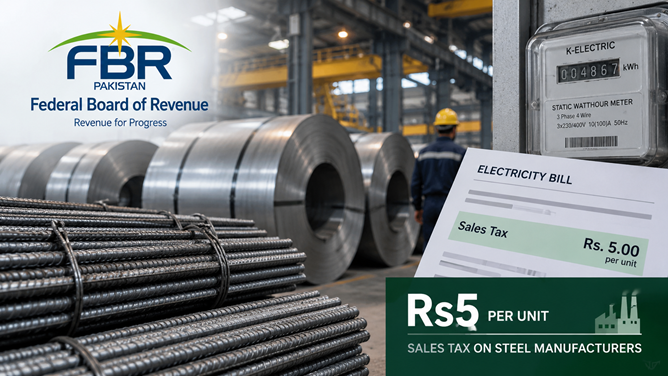
FBR Expands List of Steel Manufacturers Subject to Rs5 Per Unit Sales Tax
The Federal Board of Revenue (FBR) has expanded the list of iron and steel manufacturers subject to sales tax based on electricity consumption, introducing another change affecting Pakistan’s steel sector.
The change has been made through Sales Tax General Order No. 22 of 2026, which amends the earlier STGO 16 of 2026.
Under the arrangement, specified iron and steel manufacturers are subject to sales tax at the rate of Rs5 per unit of electricity consumed, with the amount collected through electricity bills issued by the relevant power distribution companies.
FBR Adds More Steel Manufacturers
The latest order expands the list of manufacturers covered by the electricity-based sales tax mechanism.
The system allows sales tax to be charged through electricity consumption instead of relying solely on the conventional sales tax collection process.
According to the latest development, the newly identified manufacturers will now come under the Rs5 per electricity unit tax mechanism.
How the Rs5 Per Unit Sales Tax Works
For manufacturers covered by the order, electricity consumption plays a direct role in determining the amount of sales tax collected.
The applicable power distribution company charges the specified amount through the manufacturer’s electricity bill.
For example, if a covered manufacturing unit consumes 100,000 electricity units during the relevant period, applying a Rs5 per unit rate would produce a sales tax amount of:
100,000 units × Rs5 = Rs500,000
The actual tax treatment of an individual manufacturer depends on the applicable law, FBR orders and its circumstances.
Why FBR Uses Electricity Consumption
Electricity consumption can provide tax authorities with an indicator of industrial activity in energy-intensive industries such as steel manufacturing.
Linking tax collection with electricity consumption can also make it more difficult for production activity to remain outside the tax collection system.
The latest STGO indicates that FBR continues to use sector-specific mechanisms to improve sales tax collection and documentation.
Impact on Pakistan’s Steel Industry
Manufacturers added to the list should review their upcoming electricity bills and determine how the order affects their sales tax obligations.
Businesses should also ensure that electricity connections, sales tax registration information and manufacturing details held by the authorities are correct.
Any discrepancy could create problems in tax calculation or compliance.
TaxToday.pk Note
FBR’s decision to expand the list means additional iron and steel manufacturers will fall under the Rs5 per electricity unit sales tax collection mechanism.
Affected businesses should review Sales Tax General Order No. 22 of 2026 and seek professional advice where there is uncertainty about its application.
TaxToday.pk will continue tracking FBR Sales Tax General Orders, SROs and other changes affecting businesses in Pakistan.