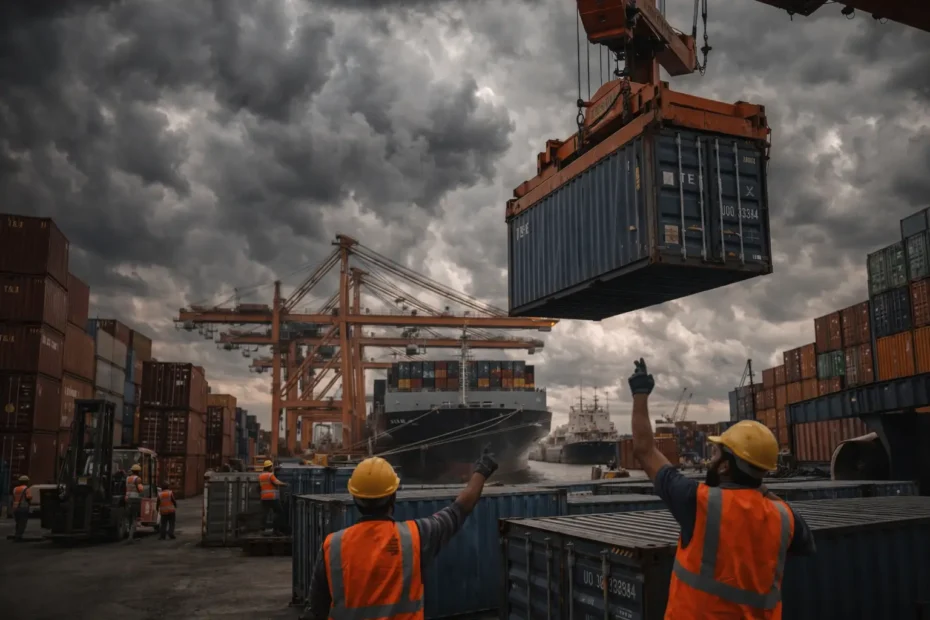
In response to growing disruptions caused by the ongoing Gulf crisis, the Federal Board of Revenue (FBR) has introduced key changes to international transhipment rules and designated a temporary storage facility at Port Qasim to ensure smooth cargo handling across Pakistan.
The decision comes as regional tensions — particularly around vital shipping routes — have begun to impact trade flows, port operations, and supply chains. Authorities say the latest measures are aimed at preventing delays, easing congestion, and maintaining the steady movement of goods into and out of the country.
Under a fresh notification, the FBR has authorised M/s DP World (QICT) to utilise a 16.9-acre area at the North Eastern Industrial Zone of Port Qasim for temporary storage of transhipment cargo.
This additional space is expected to reduce pressure on port terminals and allow faster clearance of shipments during the ongoing emergency situation.
At the same time, the FBR has tightened monitoring under revised transhipment rules. Shipping lines and airlines will now be held directly responsible for any discrepancies in cargo, including misdeclaration, pilferage, or missing goods, and may be required to pay duties and taxes in such cases.
The updated framework also extends liability to terminal operators, off-dock facilities, and ground handling agents, ensuring accountability at every stage of cargo handling. Officials say this step is crucial to prevent revenue losses and improve transparency in the system.
One of the major changes includes mandatory 100% scanning of transhipment cargo moved through ports, off-dock terminals, and airports under the Customs Computerised System. If any mismatch is detected during scanning, authorities will conduct a full physical inspection before allowing the cargo to exit port premises.
In cases of serious irregularities, legal action can be initiated against the responsible shipping line or airline. Additionally, customs authorities have been empowered to suspend cargo movement involving specific operators if violations are found or if such operations disrupt clearance of goods meant for domestic consumption.
To further strengthen oversight, operators are now required to submit detailed monthly reconciliation reports of transhipment cargo, including its arrival, storage, and onward movement, by the fifth day of each month.
Experts say the move reflects Pakistan’s attempt to proactively manage the impact of geopolitical tensions on trade logistics. With shipping routes in the Gulf region facing uncertainty — especially around key passages like the Strait of Hormuz — timely policy adjustments have become essential to avoid supply chain breakdowns.
The allocation of additional storage and stricter enforcement measures are expected to improve efficiency at ports while ensuring that cargo meant for both domestic use and re-export continues to move without major disruption.
Overall, the FBR’s latest steps signal a more responsive approach to crisis management, aimed at protecting trade activity and maintaining economic stability during a period of heightened regional uncertainty.