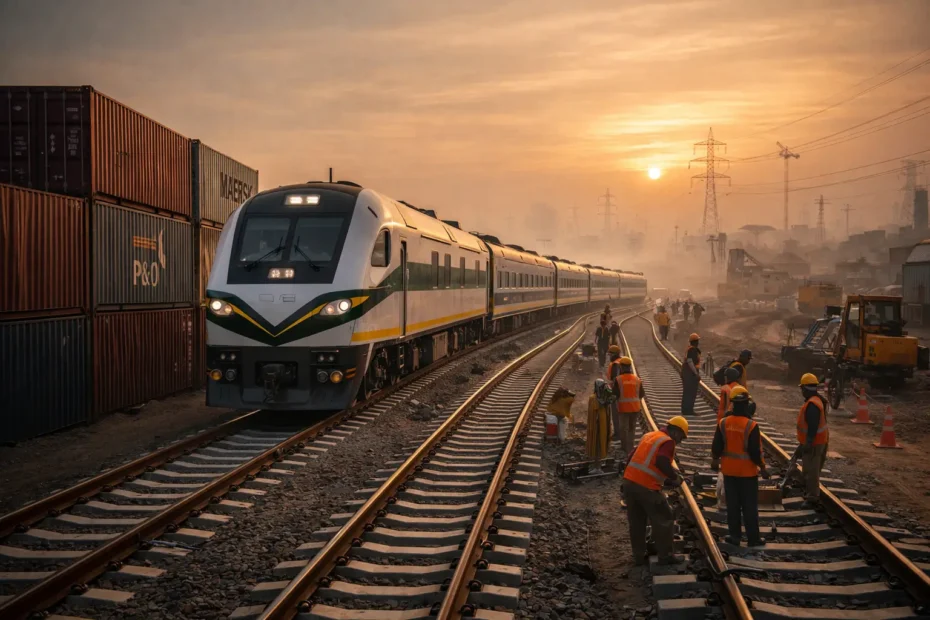
Modernising Pakistan’s railway system is increasingly being seen as a critical step toward unlocking economic growth, improving trade efficiency, and reducing the country’s heavy reliance on road transport.
Experts and policymakers believe that a strong and efficient railway network can significantly lower logistics costs, which remain one of the biggest hurdles for Pakistan’s industrial and export sectors. Rail transport is widely considered cheaper, safer, and more reliable for moving bulk goods compared to road-based alternatives, making it essential for long-term economic planning.
Pakistan Railways, once the backbone of national connectivity, has struggled for decades due to outdated infrastructure, financial losses, and lack of investment. A large portion of the existing railway system is considered obsolete, with aging tracks, bridges, and rolling stock limiting both speed and capacity.
However, the government has renewed focus on revamping the sector. Key projects like the Main Line-1 (ML-1), which connects Karachi to Peshawar, aim to upgrade tracks, increase train speeds, and expand freight capacity. Once completed, such projects are expected to reduce travel time and ensure smoother transportation of goods across the country.
Officials have repeatedly emphasised that railway modernisation, including digitisation and improved passenger facilities, will play a major role in strengthening the national economy. The government is also working with international partners to secure funding for large-scale upgrades and expand the network to regional markets, including Central Asia.
A modern railway system can directly support industries by ensuring timely delivery of raw materials and finished goods. For example, improved rail connectivity can help transport coal from Thar, minerals from Balochistan, and agricultural produce from rural areas to urban markets and ports more efficiently.
Beyond domestic benefits, better rail infrastructure can also enhance regional trade. Projects like the proposed Uzbekistan-Afghanistan-Pakistan railway corridor aim to connect Pakistan with Central Asian markets, potentially reducing cargo delivery times and opening new trade routes.
Despite the potential, challenges remain. Financing constraints, project delays, and institutional inefficiencies continue to slow progress. The ML-1 project, for instance, has faced repeated delays due to cost revisions and funding issues, highlighting the need for consistent policy direction and investment.
Analysts say that without timely reforms, Pakistan risks falling further behind regional competitors who are rapidly upgrading their transport infrastructure. On the other hand, successful railway modernisation could create jobs, boost exports, and improve overall economic stability.
In simple terms, a modern railway network is not just about better trains — it is about building a stronger economic foundation. For Pakistan, investing in railways could prove to be one of the most effective ways to support sustainable growth in the coming years.