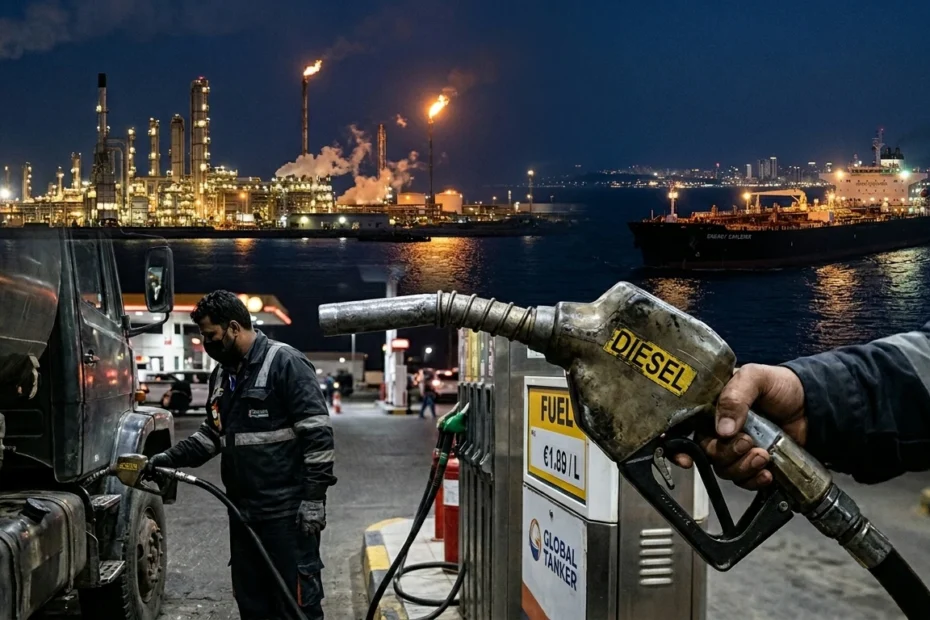
International diesel prices have surged by nearly 17 percent amid escalating tensions in the Middle East, which disrupted fuel production and supply routes. The sudden spike has sent shockwaves through global energy markets, raising concerns for oil-importing countries such as Pakistan, where fuel costs directly influence inflation and economic stability.
Energy traders reacted swiftly to reports of supply constraints in key oil-producing and refining hubs, tightening global diesel availability and pushing benchmark prices sharply higher.
Supply Chain Disruptions Fuel Price Rally
The Middle East plays a central role in global petroleum production and shipping. Any instability in the region often leads to volatility in energy markets. Recent geopolitical tensions have reportedly affected refining operations and shipping schedules, contributing to reduced diesel exports.
Diesel is critical for commercial transportation, agriculture, power generation, and heavy industry. As supply tightens, prices tend to respond quickly due to strong global demand and limited short-term alternatives.
Implications for Pakistan
Pakistan relies significantly on imported petroleum products to meet domestic demand. A sustained rise in global diesel prices could increase the country’s import bill and put additional pressure on foreign exchange reserves.
Domestic fuel prices are reviewed periodically based on international market trends and currency fluctuations. If global benchmarks remain elevated, Pakistani consumers may face higher diesel prices in upcoming revisions.
Inflation and Economic Impact
Diesel powers much of Pakistan’s logistics and transport network, including trucks, buses, and agricultural machinery. Higher diesel prices often translate into:
- Increased freight and transportation costs
- Higher food and commodity prices
- Added pressure on inflation
- Rising operational costs for businesses
Given the current economic environment, any prolonged spike in fuel costs could intensify inflationary pressures.
Global Market Outlook
Energy markets remain highly sensitive to geopolitical developments. Even temporary disruptions can trigger price volatility as traders anticipate potential shortages. The direction of diesel prices in the coming weeks will largely depend on the stability of production facilities and shipping routes in the affected region.
If tensions ease and supply flows normalize, prices could stabilize. However, continued uncertainty may sustain upward pressure on global diesel benchmarks.