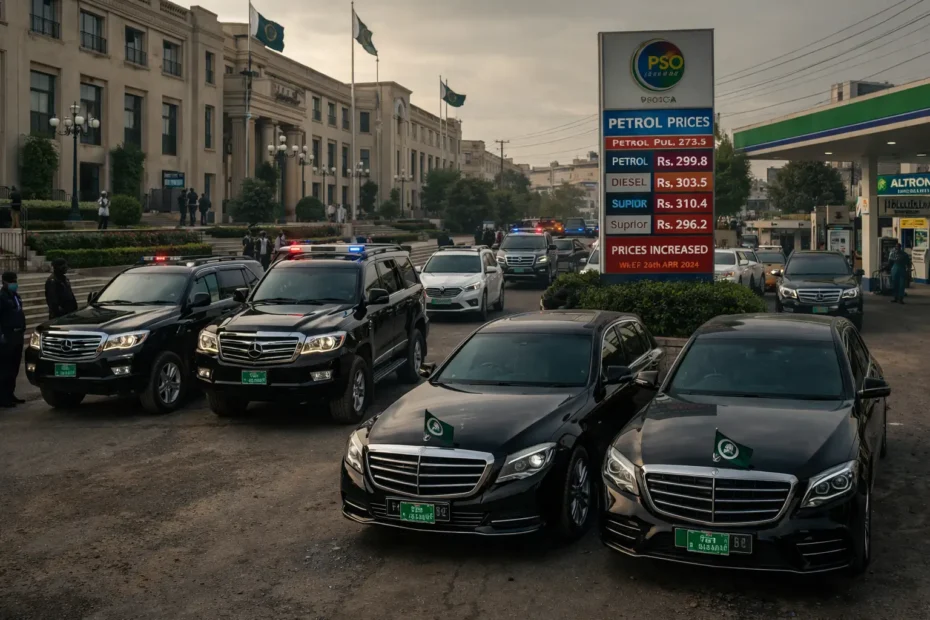
In a fresh push to control rising expenditures, Prime Minister Shehbaz Sharif has imposed a complete ban on the use of high-octane fuel in all government vehicles, tightening the country’s ongoing austerity drive.
The decision comes at a time when Pakistan is grappling with a fuel crisis driven by increasing global oil prices, largely linked to tensions in the Middle East. Officials say the move is aimed at reducing unnecessary spending and ensuring that public funds are used more responsibly.
According to the Prime Minister’s Office, no government department will now be allowed to use high-octane fuel at the state’s expense. In exceptional cases, if such fuel is deemed necessary, the cost will have to be paid by the concerned officials from their own pockets.
This step follows closely after the government significantly increased the petroleum levy on high-octane fuel — commonly used in luxury vehicles — raising it by Rs200 per litre and taking the total levy to Rs300 per litre. The move is expected to generate around Rs9 billion per month, which the government plans to utilise for public relief.
The policy reflects a broader strategy to shift the financial burden towards wealthier segments of society, while protecting lower- and middle-income groups from additional fuel price hikes. Importantly, the government has kept prices of regular petrol and diesel unchanged to avoid an increase in transport fares and daily expenses for ordinary citizens.
This latest directive is part of a wider set of austerity measures introduced in recent weeks. These include a 50 per cent reduction in fuel allowances for official vehicles, a four-day work week for government offices, and work-from-home arrangements for a portion of public sector employees.
Additionally, the government has taken steps such as cutting salaries of ministers and reducing operational expenses across departments, signalling an effort to demonstrate fiscal discipline at the top level.
While the measures are being presented as necessary in the current economic situation, analysts say they are largely short-term solutions. Pakistan continues to face deeper structural challenges, including reliance on imported fuel and limited fiscal space, which make the economy vulnerable to external shocks.
For now, the ban on high-octane fuel for official use sends a symbolic message — that the government is attempting to lead by example in a time of economic difficulty. However, long-term stability will depend on broader reforms, including energy diversification, improved efficiency, and sustainable fiscal policies.