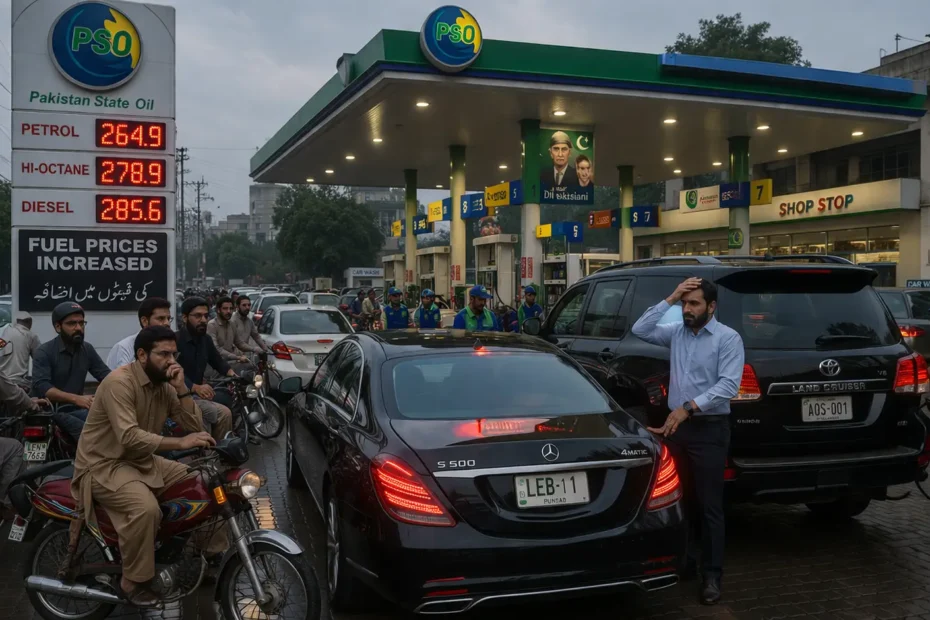
Pakistan’s decision to increase the petroleum levy on high-octane fuel may bring short-term relief to the general public, but it does little to solve the country’s deeper energy and economic challenges.
The government has targeted high-octane fuel — mostly used by luxury and high-performance vehicles — to collect additional revenue. This move is expected to generate around Rs9 billion per month, shifting some financial burden onto wealthier consumers while protecting ordinary citizens from rising fuel prices.
At first glance, the policy appears fair. Those with greater financial capacity are being asked to contribute more during a time of economic stress. However, experts argue that this approach is only a temporary measure rather than a long-term solution.
Pakistan continues to face serious structural issues, including heavy dependence on imported fuel, a fragile external account, and limited fiscal space. These weaknesses make the country highly vulnerable to global oil price shocks, especially during geopolitical tensions such as the ongoing Middle East conflict.
The recent surge in international oil prices has once again exposed these vulnerabilities. While the government has attempted to cushion the impact through measures like reduced fuel allowances and partial work-from-home policies, these steps remain limited in scope and effectiveness.
Finance policymakers themselves have acknowledged that relying on temporary fixes is not sustainable. Without broader reforms, Pakistan risks repeating the same cycle of crisis management every time global oil prices rise.
A more comprehensive strategy is needed — one that focuses on reducing reliance on imported fuels, promoting renewable energy, improving public transport, and strengthening fiscal discipline. Without such reforms, small policy adjustments like targeted levies will continue to offer only brief relief.
In simple terms, while the latest decision may ease pressure on the public for now, it does not address the root causes of Pakistan’s energy crisis. The country still needs a clear, long-term roadmap to achieve energy security and economic stability.