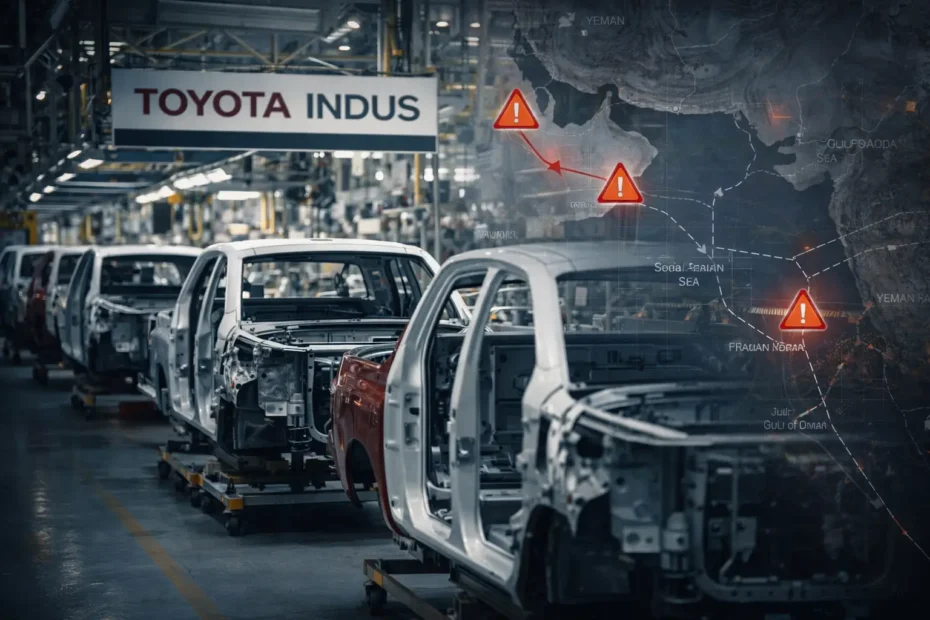
Toyota Indus Warns of Production Cracks as Middle East Crisis Hits Supply Chains
KARACHI: Indus Motor Company (IMC), the assembler of Toyota vehicles in Pakistan, has issued a cautionary note regarding potential production hiccups as the escalating geopolitical conflict in the Middle East begins to rattle global shipping corridors.
During a corporate briefing held recently at the Pakistan Stock Exchange (PSX), the company management highlighted that the unrest in the Gulf region—specifically around the Strait of Hormuz—is creating a ripple effect that could soon reach the local automotive assembly lines.
The primary concern for the automaker remains the timely arrival of Completely Knocked Down (CKD) kits and essential components. With global shipping giants rerouting vessels to avoid volatile zones, freight costs have seen a sharp uptick.
“While we are currently maintaining our production schedules, the logistical congestion and higher shipping premiums are putting significant pressure on our inventory management,” a company official informed analysts. The management warned that if the situation persists, the impact on production timelines would become more visible by next month.
The warning comes at a delicate time for the auto industry. After a period of relative stability characterized by moderate inflation and steady financing rates, vehicle demand in Pakistan had begun a gradual recovery. IMC reported a 63% surge in sales volumes during the first half of the current fiscal year, driven largely by the popularity of models like the Toyota Yaris and Corolla.
However, the “Black Swan” event in the Middle East threatens to undo these gains. Beyond shipping delays, the industry is also bracing for the indirect impact of rising global energy prices, which could trigger a fresh wave of domestic inflation and dampen consumer purchasing power.
Amidst these challenges, IMC is urging the government to provide policy clarity. The company has called for a rationalization of the tax structure, specifically suggesting a reduction in the 25% sales tax currently levied on certain vehicle categories to a more neutral 18%.
Despite the regional uncertainty, the automaker remains committed to its long-term strategy, including potential model refreshes. However, the official timeline for new launches remains “under review” as the company monitors the maritime security situation and its impact on the “Make in Pakistan” supply chain.