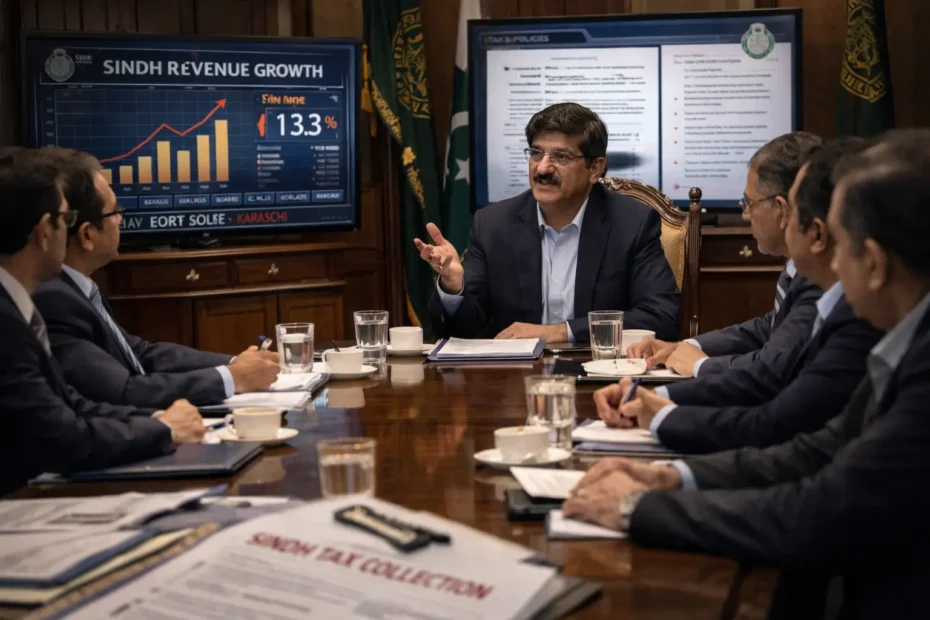
KARACHI: The Sindh Revenue Board (SRB) has recorded a historic recovery in tax arrears as the provincial government intensifies fiscal reforms aimed at strengthening revenue collection and expanding the tax base.
During a performance review meeting held at the Chief Minister House, Sindh Chief Minister Syed Murad Ali Shah assessed the board’s performance and future strategy, describing SRB as a key institution supporting the province’s financial stability.
Officials briefed the meeting that SRB recovered Rs9.5 billion in tax arrears in February, marking one of the largest recoveries in the authority’s history. The strong enforcement drive helped push total revenue collection to Rs34.86 billion for the month, showing a 41 percent increase compared with Rs24.66 billion collected during the same month last year.
Revenue collection shows strong growth
The board’s cumulative collection during July–February of the current fiscal year reached Rs225.65 billion, reflecting a 24 percent increase from Rs182.6 billion recorded during the same period last year.
Officials attributed the growth to stronger monitoring of high-risk sectors, targeted recovery drives, and improved taxpayer facilitation. The SRB also expanded digital tools for tax reporting and compliance.
The briefing highlighted that SRB had already crossed a major milestone during the previous fiscal year when total collections reached Rs306.6 billion, including Rs284.4 billion from Sindh Sales Tax on Services (SST).
Key sectors drive provincial revenue
According to the review, the ports, terminals, telecommunication, banking, franchise and insurance sectors remained the largest contributors to Sindh’s revenue pool.
Port, airport and terminal operators emerged as the top contributors, generating Rs40.2 billion, followed by the telecommunications sector with Rs24.2 billion. Banking services contributed Rs20.34 billion, while franchise services generated Rs17.53 billion.
Officials said the top ten service sectors collectively contributed Rs155.6 billion, demonstrating the growing role of the services sector in provincial revenue generation.
Government orders stronger enforcement
Chief Minister Murad Ali Shah directed the SRB to further expand the tax base and bring undocumented service providers into the system. He also called for stricter enforcement against tax evasion and faster implementation of digital reforms to improve transparency.
The government has also strengthened SRB’s institutional capacity by establishing a dedicated Intelligence, Investigation and Prosecution Wing, designed to tackle tax fraud and fake invoicing cases.
Authorities say the reforms, combined with stronger monitoring and automation of tax deductions through government accounting systems, have significantly improved compliance and transparency in the province’s tax administration.
Officials added that continued digitalisation and enforcement measures will remain central to Sindh’s strategy to stabilise provincial finances and support long-term economic reforms.