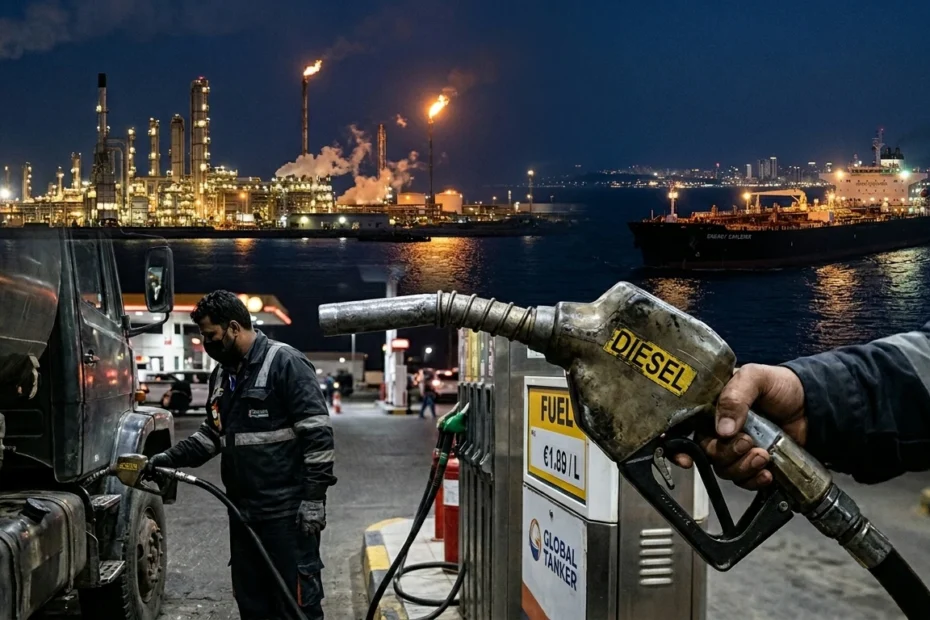
Prime Minister Shehbaz Sharif announced an immediate Rs 80 per litre reduction in the petroleum levy on petrol late Friday, cutting the pump price from Rs 458.41 to Rs 378 per litre effective midnight — less than 24 hours after Pakistan recorded the largest single-day fuel price hike in its history. The reversal came after mass public backlash against Thursday’s shock announcement by Petroleum Minister Ali Pervaiz Malik and Finance Minister Muhammad Aurangzeb, who had raised petrol 43% and diesel 55% in a single revision citing the Gulf war-driven global oil crisis.
The government had raised petrol by Rs 137.24 per litre and diesel by Rs 184.49 per litre on 3 April 2026, taking diesel to Rs 520.35 per litre and petrol to Rs 458.41 — the highest price ever recorded in Pakistan’s history. Within 24 hours, PM Shehbaz announced an immediate Rs 80 per litre reduction in the petroleum levy on petrol — bringing the price down to Rs 378 per litre, effective from midnight on 4 April, going into 5 April 2026. Diesel remained at Rs 520.35. The government reduced the diesel levy to zero but did not reduce the pump price, channelling relief instead through a targeted transport subsidy package.
| Fuel | Old Rate (Pre-3 Apr) | Post-Hike Rate (3 Apr) | Post-Levy-Cut Rate (5 Apr) |
|---|---|---|---|
| Petrol (MS 92 RON) | Rs 321.17/litre | Rs 458.41/litre | Rs 378.00/litre |
| High-Speed Diesel | Rs 335.86/litre | Rs 520.35/litre | Rs 520.35/litre |
| Kerosene Oil | Rs 392.50/litre | Rs 467.48/litre | Rs 467.48/litre |
Sources: OGRA official notification 3 April 2026; PM’s national address 4 April 2026.
The Petroleum Levy Anatomy — Where Rs 378 Comes From
Official OGRA pricing documents showed that petrol consumers were being charged approximately Rs 211.26 per litre in levies and profit margins alone at the Rs 458 rate. The ex-refinery price of petrol stood at Rs 247.15 per litre. The petroleum levy at that rate was Rs 160.61 per litre, alongside Rs 24.12 in customs duty and Rs 2.50 under the climate support levy. Inland freight margin stood at Rs 7.52 per litre, with Rs 7.87 per litre as OMC profit and Rs 8.64 as dealer commission.The PM’s Rs 80 levy cut reduces the petroleum levy from Rs 160.61 to approximately Rs 80.61 per litre — meaning even at Rs 378, the government collects over Rs 80 per litre in levy alone on every litre of petrol sold in Pakistan.
Cumulative fuel price increases reached Rs 192.24 per litre on petrol and Rs 239.55 per litre on diesel in the weeks following the US and Israel launching attacks on Iran on 28 February. The levy on petrol had been raised by Rs 55.24 per litre to Rs 160.61 per litre, while the levy on high-speed diesel was reduced to zero from Rs 55.24 per litre. Petroleum Minister Ali Pervaiz Malik said “difficult and responsible” decisions were taken after a national-level consultation involving the president, prime minister, military leadership, and all four provincial chief ministers, to restrict subsidies to the most deserving segments while maintaining fiscal discipline and preserving economic stability under international commitments. Malik said: “Crude oil prices have reached record levels, with diesel in the international market rising above $250 per barrel. Oil supply primarily comes through the Strait of Hormuz. Even countries with strategic reserves have declared energy emergencies.”
The Targeted Subsidy Package:
PM Shehbaz simultaneously announced a targeted relief package alongside the levy cut:
A subsidy of Rs 100 per litre for motorcycle users, capped at 20 litres per month, was announced. For the transport sector, small trucks receive Rs 70,000 per month, large trucks Rs 80,000 per month, and public transport buses Rs 100,000 per month. Small farmers receive a one-time Rs 1,500 per acre subsidy. Pakistan Railways economy class fares will not increase. All relief measures extend to Gilgit-Baltistan and Azad Jammu and Kashmir. The prime minister had so far announced subsidies worth Rs 129 billion related to petroleum prices since the crisis began on 28 February 2026.
The Rs 80 levy cut carries an additional fiscal cost that the government has not yet publicly quantified. At Pakistan’s current petrol consumption levels — approximately 800,000 to 900,000 tonnes per month — every Rs 10 per litre levy cut costs the government roughly Rs 8–9 billion per month in foregone revenue.
“I am announcing an immediate reduction of Rs 80 per litre in the petrol levy,” PM Shehbaz said in his national address. “The revised price of Rs 378 per litre will take effect from midnight and be reflected at fuel stations across the country. The reduction will remain in place for at least one month and will apply nationwide.”
Finance Minister Muhammad Aurangzeb had explained the earlier hike: “The decisions were taken with consensus among the national leadership to address energy and food security challenges, noting that other countries were facing more severe pressures. Fertiliser prices in Pakistan remain around Rs 4,000 per bag compared to international levels of about Rs 15,000.”
The Pakistan Business Forum (PBF) criticised the Rs 160 levy rate imposed on Thursday before the reversal. The PBF urged Prime Minister Shehbaz Sharif to immediately abolish the petroleum levy, warning the move would further strain industrial activity and inflate the cost of doing business across the country.
At Rs 378 per litre, petrol remains 17.7% above the pre-crisis rate of Rs 321.17 that held until 3 April — meaning the Rs 80 levy cut reverses only part of Thursday’s Rs 137 hike. Motorcyclists — over 30 million registered in Pakistan — face a pump price Rs 56.83 per litre higher than a month ago, partially offset by the Rs 100/litre subsidy capped at 20 litres per month. Truckers and transport operators face diesel at Rs 520.35, the highest level in Pakistan’s history, offset only by one-month direct cash transfers. Businesses relying on diesel — from textile mills to construction firms to cold chain operators — face a structural cost increase with no offsetting subsidy, putting upward pressure on the prices of every good that moves by road in Pakistan.