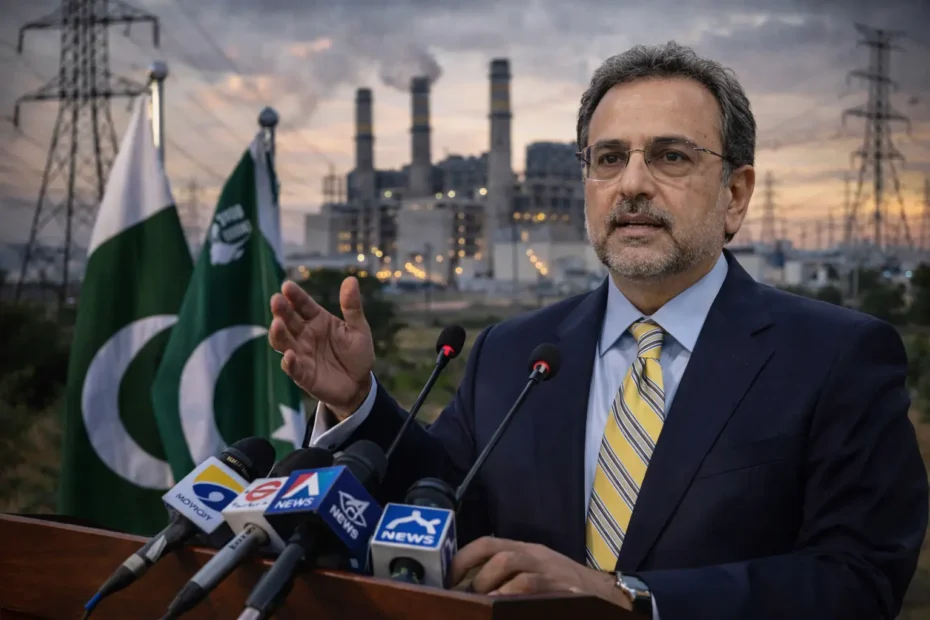
ISLAMABAD: Pakistan’s expanding reliance on domestic energy sources has significantly reduced its exposure to disruptions in global liquefied natural gas (LNG) supplies, according to Federal Power Minister Awais Leghari.
Speaking about the country’s energy outlook, the minister said Pakistan now generates the majority of its electricity from local resources, including hydropower, solar, wind, nuclear and coal. This shift has strengthened the country’s ability to withstand volatility in international LNG markets.
Officials say about 74 percent of Pakistan’s electricity currently comes from domestic sources, a major increase compared with previous years when imported fuels played a larger role in the power mix.
The government plans to further increase local generation capacity so that around 96 percent of electricity could come from domestic sources by 2034, reducing reliance on imported fuel and protecting the economy from global price shocks.
Energy planners say the expansion of solar installations, hydropower projects and nuclear plants has helped diversify the country’s energy mix and improve supply stability.
The power minister noted that LNG currently contributes around 10 percent of Pakistan’s electricity generation, mainly used to meet demand during evening peak hours and to stabilize the power grid.
Because of this relatively small share, disruptions in global LNG supplies would have only a limited impact on Pakistan’s overall electricity production.
However, officials acknowledged that prolonged supply interruptions during high-demand periods—particularly in summer—could still lead to temporary power shortages or load management in some areas.
Energy markets have recently faced uncertainty due to geopolitical tensions in the Middle East, which have raised concerns about possible disruptions in global oil and gas shipments.
Several countries that rely heavily on imported LNG are already reviewing their energy policies to prepare for potential supply shocks.
Pakistan, however, believes its growing reliance on local energy resources has improved resilience against such external risks.
One of the biggest changes in Pakistan’s energy landscape has been the rapid growth of solar power. Rooftop solar installations and large-scale solar projects have significantly reduced electricity demand during daylight hours, lowering reliance on imported fuels.
Officials say the government will continue expanding renewable energy projects and improving grid infrastructure to strengthen energy security and reduce the country’s fuel import bill.
Energy experts believe that maintaining a balanced mix of renewable, hydropower and domestic fuel resources will remain critical for Pakistan as global energy markets continue to face volatility.