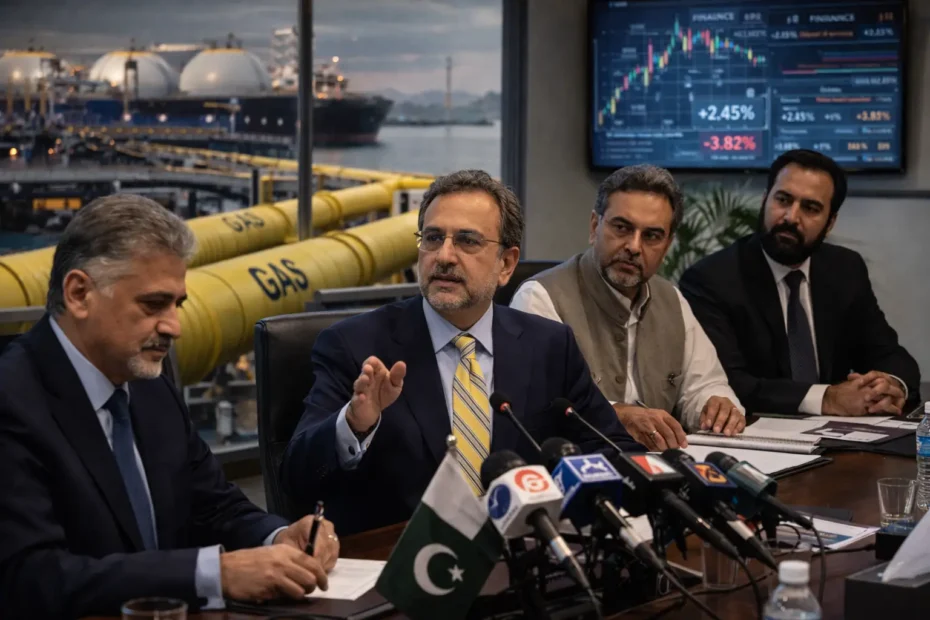
ISLAMABAD: The federal government has presented a plan to the International Monetary Fund (IMF) to clear Rs1.5 trillion in gas sector circular debt over the next three years, but the proposal still requires the lender’s approval before implementation.
Officials familiar with the discussions said the proposal was presented during the recent review talks under Pakistan’s $7 billion IMF bailout programme, though negotiations ended without a final decision on the plan.
The government aims to secure the IMF’s consent before the upcoming federal budget so it can allocate funds to begin retiring a portion of the debt during the next fiscal year.
Government outlines repayment strategy.
Under the proposed framework, Islamabad intends to settle the debt using several revenue sources. These include savings from liquefied natural gas (LNG) contracts, dividends from state-owned energy companies, and funds generated through petroleum product levies.
Officials estimate that LNG-related savings alone could contribute around Rs400 billion toward the repayment plan. Additional funds would come from earnings of major public-sector gas companies and collections linked to petroleum product consumption.
The government plans to retire roughly one-third of the principal debt in the first phase, provided the IMF approves the strategy.
Circular debt remains a major challenge.
Pakistan’s gas sector circular debt has surged to more than Rs3.4 trillion, including about Rs1.8 trillion in principal liabilities accumulated through pricing gaps, delayed payments, and operational inefficiencies in the energy supply chain.
However, the government intends to settle about Rs1.5 trillion of the debt, as the remaining amount involves unresolved tax refunds and court cases.
The proposed settlement also requires oil and gas companies to waive more than Rs1.6 trillion in late-payment surcharges that have accumulated due to delayed principal payments.
IMF concerns remain under review
Officials said the IMF has acknowledged that the federal government is responsible for clearing these liabilities, but the lender wants to review the financing structure and the plan’s long-term sustainability before giving final approval.
The government has also assured the IMF that it will revise gas tariffs twice a year—typically in July and February—to prevent new debt accumulation in the energy sector.
Energy reforms linked to the IMF programme.
The circular debt problem has remained a major challenge for Pakistan’s energy sector for years, affecting gas distribution companies and public finances. Authorities say resolving the issue forms a key part of broader reforms agreed under the IMF programme aimed at stabilising the economy and improving fiscal discipline.
Energy experts believe clearing a large portion of the gas sector debt could strengthen the financial health of state-owned gas companies and help stabilise Pakistan’s energy supply chain in the coming years.