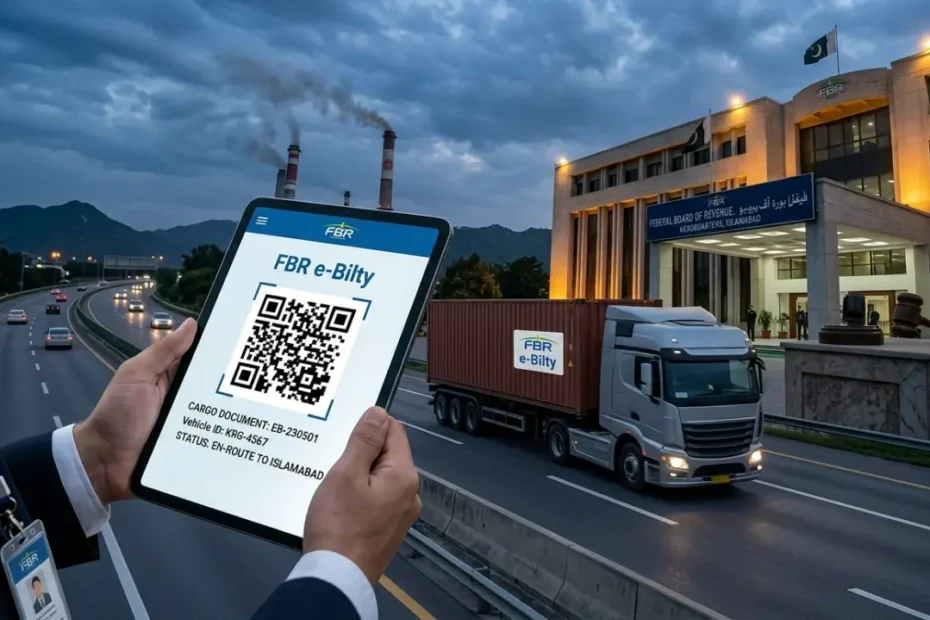
ISLAMABAD — Pakistan’s tax authority is preparing to introduce a nationwide digital e-Bilty system as part of a broader push to modernize cargo monitoring and eliminate paper-based trade documents used in goods transportation.
Officials at the Federal Board of Revenue (FBR) say the new mechanism will operate through a National Cargo Tracking System (CTS), allowing authorities to generate electronic transport documents and monitor the movement of commercial cargo in real time.
Shift Away from Paper-Based Bilty System
At present, transporters and traders rely on the traditional “Bilty”, a paper document used to record details of goods being transported between cities. The manual process often leads to delays at checkpoints and creates opportunities for manipulation, fake documentation, and tax evasion.
Under the new framework, the paper document will be replaced by an electronic e-Bilty generated through a central online portal, enabling authorities to track shipments digitally from origin to destination.
The digital record will allow enforcement teams to verify cargo instantly, reducing reliance on manual inspection and road-side documentation checks.
Cargo Tracking System to Monitor Goods Movement
The e-Bilty will operate alongside the Digital National Cargo Tracking System, a technology-driven platform designed to monitor commercial transport across the country.
Officials say the system will provide real-time visibility of cargo movement, helping authorities detect suspicious shipments and identify goods moving without proper tax documentation.
The project is currently in the design and feasibility stage, with international consultants assessing Pakistan’s infrastructure and developing the technical architecture required for implementation.
Targeting Smuggling and Fake Invoices
FBR believes the digital system will close loopholes that allow smuggling and the use of fake or “flying” invoices in the supply chain.
By integrating the e-Bilty mechanism with existing tax and customs platforms, authorities will be able to cross-check transport records with tax filings and digital invoices, strengthening enforcement against sales tax evasion.
Officials say the move will also reduce administrative pressure on customs teams and streamline compliance for businesses that follow tax rules.
Step Toward Digital Trade Management
The initiative forms part of Pakistan’s wider effort to digitize tax administration and trade documentation. The government has already launched digital invoicing systems and electronic customs platforms to improve transparency and increase revenue collection.
Once fully operational, the e-Bilty platform will allow regulators to monitor cargo movements across Pakistan’s highways without relying on manual paperwork, a change officials say could significantly improve efficiency in the country’s logistics and trade sectors.
Industry observers say the success of the system will depend on how quickly transport companies, manufacturers, and logistics operators adopt the new digital framework once it becomes operational.