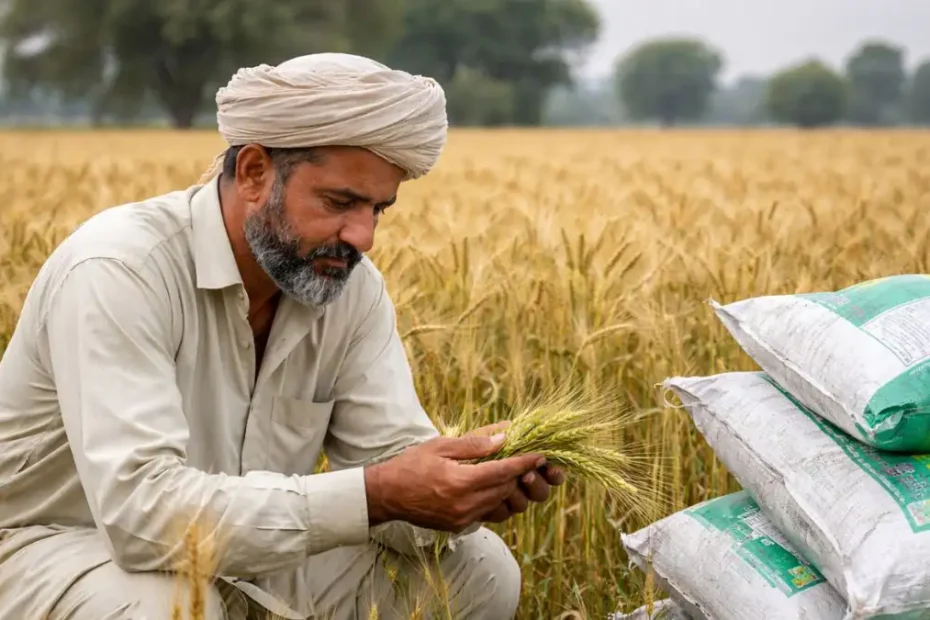
DAP fertilizer prices broke through the Rs 15,000 per bag barrier in Pakistan this week — a direct consequence of the 3 April 2026 diesel price shock that pushed high-speed diesel to Rs 520.35 per litre, the highest ever recorded in the country. The price surge, which hit specialized DAP variants at Rs 15,083 per 50 kg bag, compounds a parallel hike by Engro Fertilizers Limited (PSX: EFERT), which raised urea prices by Rs 150 per bag to Rs 4,435 effective 4 April 2026 — just as Pakistan enters its critical Kharif season planting window.
Some specialized DAP variants have hit Rs 15,083 per bag, marking an increase of roughly Rs 200 per bag. The hike comes amid rising diesel costs and fluctuating international fertilizer rates, which have pushed up production and logistics expenses for manufacturers and suppliers.
On the urea side, Engro Fertilizers Limited (PSX: EFERT) increased the price of urea by Rs 150 per bag, setting the new retail rate at Rs 4,435 per bag effective April 4, 2026, according to Arif Habib Limited. The latest revision comes after the company gradually reduced its earlier discount of Rs 400 per bag to Rs 150, which has now been completely withdrawn, effectively lifting end-user prices ahead of the upcoming fertilizer application season.
| Fertilizer Type | Previous Price | April 2026 Price | Change |
|---|---|---|---|
| DAP (standard 50kg bag) | ~Rs 14,800 | Rs 15,083 | +Rs ~200 |
| Engro Urea (50kg bag) | Rs 4,285 (with discount) | Rs 4,435 | +Rs 150 |
| Diesel (HSD) — direct driver | Rs 336/litre (pre-crisis) | Rs 520.35/litre | +Rs 184 |
| Middle East granular urea | ~$580/ton (early March) | ~$750/ton (end-March) | +29% |
Sources: Arif Habib Limited, ProPakistani, Bloom Pakistan, April 2026.
Fertilizer production in Pakistan depends on natural gas as feedstock for urea and on diesel to power logistics, agricultural machinery, and distribution networks across the country. Industry sources say the price adjustment is intended to ensure uninterrupted supply while covering escalating operational costs after diesel rates climbed above Rs 520 per litre.
The 3 April diesel hike of Rs 184.49 per litre — the largest single-day fuel price increase in Pakistan’s recorded history — pushed transport costs for every 50 kg bag of fertilizer moved from factory to farm upward by an estimated Rs 80–120 per bag depending on distance, according to logistics operators in the agricultural supply chain.
The cost shock is not solely domestic. On the international front, urea prices surged significantly. Middle East granular urea rates climbed to approximately $750 per ton by the end of March 2026, compared to nearly $580 earlier in the month — a more than 29% increase driven by tightening supply conditions and heightened geopolitical tensions affecting energy and fertilizer trade routes.
DAP is largely imported by Pakistan, priced in US dollars. With diesel at Rs 520.35/litre and USD/PKR at Rs 279–280, the landed cost of imported DAP has surged at a double velocity — higher dollar prices combined with an energy-inflated domestic distribution cost.
Market analysts note that other major fertilizer producers in Pakistan, including Fauji Fertilizer Company (PSX: FFC), are expected to adjust prices in the coming days, as the industry responds to rising production and input costs, particularly energy and feedstock expenses.
FFC’s Sona DAP and Sona Urea brands command the largest market share among Pakistani farmers — any FFC price revision in the coming week will set the effective floor price for the entire Kharif season.
The fertilizer sector entered April 2026 already under severe demand stress. Pakistan’s fertilizer sector is already under pressure from weakening demand. Total urea sales during the first two months of 2026 stood at around 468,000 tons, marking a sharp 41% year-on-year decline, despite some recovery momentum observed in February.
Pakistan’s total urea sales for the first two months of 2026 stood at a concerning 468,000 tons — a significant decrease of 41% year-on-year compared to the same period in the previous year. While there was a partial recovery in February, and sales had touched an all-time high in December 2025 due to advance buying, the overall trend for early 2026 indicates a slowdown in demand.
Farmers have voiced strong concerns, urging the federal government to monitor fertilizer prices closely, consider targeted subsidies, and streamline imports to prevent further market volatility. Farmers are advised to book fertilizer requirements early through authorized dealers and consider a balanced use of Sona Urea, SSP, and micronutrients like Zinc and Boron, as prices are expected to remain volatile.
Farmers’ bodies have pointed out that the government’s current fuel relief package for agriculture — Rs 1,500 per acre — does not compensate for fertilizer cost increases at these levels. A small farmer cultivating 5 acres of wheat now faces an input cost increase of over Rs 15,000 in fertilizer alone per season from April 2026 levels, against a one-time government subsidy of Rs 7,500 total.
Pakistan’s agricultural sector contributes approximately 24% of GDP and employs nearly 38% of the labour force, per PBS data. Fertilizer costs directly set the floor cost of wheat, rice, cotton, and sugarcane — Pakistan’s four major crops. With urea now at Rs 4,435 per bag and DAP above Rs 15,000, farmers face a direct choice between cutting fertilizer application (reducing yields) and absorbing higher input costs (reducing farm-gate margins). Either outcome flows directly into food price inflation within 6–10 weeks of the planting cycle.
Economists at Arif Habib Limited estimate that Pakistan’s March 2026 headline CPI of 7.3% year-on-year will climb toward 9–11% by June 2026, with agricultural input cost pass-through as one of the primary drivers alongside transport and energy costs.