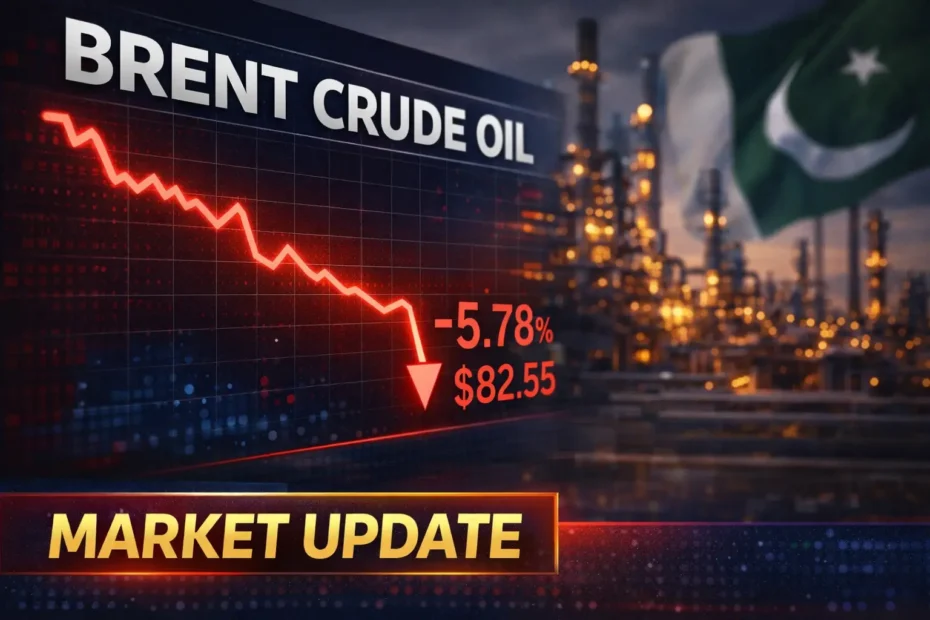
ISLAMABAD: Global energy markets witnessed a dramatic shift on Tuesday as crude oil prices crashed by over 6 percent following optimistic statements from U.S. President Donald Trump regarding a potential ceasefire in the Middle East. The sudden drop provides a much-needed breather for Pakistan’s economy, which has struggled under the weight of high import costs.
In international markets, brent crude oil prices tumbled to $72.40 per barrel, marking the sharpest single-day decline in months. The West Texas Intermediate (WTI) followed suit, dropping significantly as traders reacted to the President’s prediction that regional tensions would cool down shortly. This de-escalation talk has effectively removed the “war premium” that kept oil trading at elevated levels throughout the first quarter of 2026.
Market analysts in Karachi and Islamabad are closely monitoring the oil price per barrel to determine the impact on domestic petroleum rates. “The crash in brent oil price offers the government a golden opportunity to pass on relief to the public or stabilize the circular debt,” stated a senior energy consultant.
Oil prices today reflect a growing confidence among investors that supply routes through the Strait of Hormuz will remain secure. Just last week, fears of a wider regional conflict had pushed prices toward the $85 mark, but the latest diplomatic signals have reversed that momentum.
For Pakistan, the falling cost of oil is a vital development. As a net importer of energy, the country stands to save millions in foreign exchange reserves if the downward trend in crude oil prices persists through the next fortnight. Domestic consumers now look toward the Oil and Gas Regulatory Authority (OGRA) for a potential price slash in the upcoming fuel review.
While the market remains volatile, the current trajectory suggests that the era of $80+ brent crude oil prices may be ending, provided the diplomatic breakthrough in the Middle East holds firm.