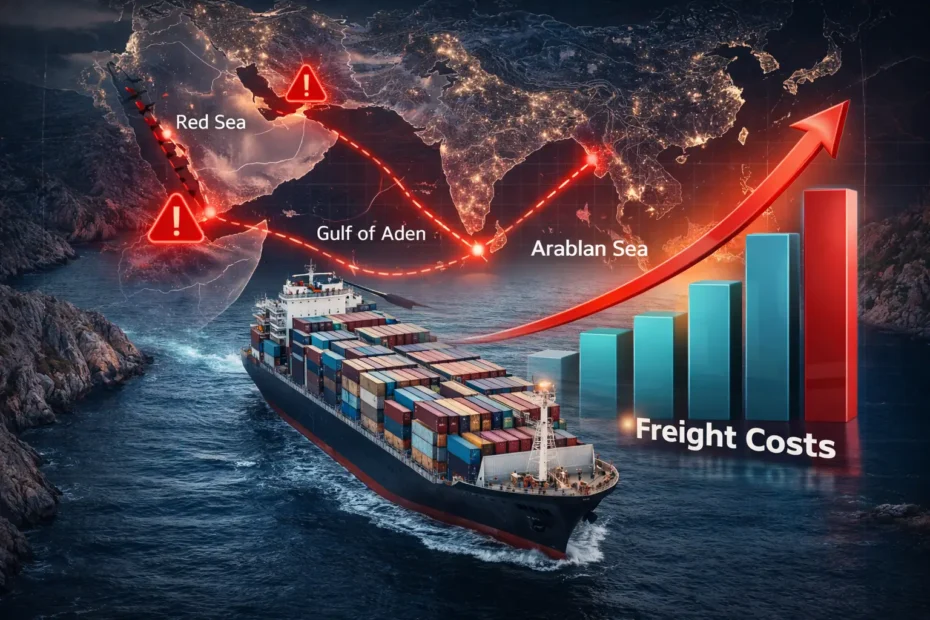
Middle East War Threatens Trade Routes as Logistics Costs Hit Record Highs
ISLAMABAD: Commerce Minister Jam Kamal Khan has warned that the intensifying conflict in the Middle East could severely disrupt global energy routes and trigger a massive spike in logistics costs for Pakistani exporters.
Speaking at a high-level briefing on Friday, the Minister highlighted that the closure of the Strait of Hormuz and volatility in the Red Sea have already forced shipping lines to reroute vessels. This shift is significantly increasing transit times and freight insurance premiums, making Pakistani products less competitive in international markets.
Impact on Export Competitiveness
The Ministry of Commerce reported that freight charges on key routes have surged by as much as 300% in some instances. “Our textile and surgical sectors face immediate pressure as shipping companies impose ‘war-risk’ surcharges,” the Minister noted. He emphasized that prolonged instability will not only delay shipments but also inflate the cost of raw material imports, potentially stalling industrial output in the final quarter of the fiscal year.
To mitigate these shocks, the government is exploring alternative transit corridors. Minister Jam Kamal recently met with Kazakh officials to discuss strengthening rail and road connectivity through Central Asia, aiming to bypass volatile maritime chokepoints.
Energy Security and Supply Chains
The Commerce Ministry is working closely with the Ministry of Petroleum to secure energy lifelines. Roughly 80% of Pakistan’s crude oil imports transit through the Strait of Hormuz, making the country exceptionally vulnerable to maritime blockades.
The Minister confirmed that the government has already requested Saudi Arabia to facilitate oil shipments through the Red Sea port of Yanbu as a contingency measure. “We are monitoring the situation daily to ensure that our supply chains remain liquid and our manufacturing hubs continue to operate without interruption,” he added.
Call for Private Sector Resilience
The government urged the business community to diversify their export destinations and brace for longer lead times. While the state is providing all possible diplomatic and logistical support, officials admit that a sustained regional war would place an unprecedented strain on Pakistan’s balance of payments and foreign exchange reserves.
The Ministry of Commerce plans to submit a comprehensive “Trade Continuity Plan” to the Economic Coordination Committee (ECC) next week to protect the country’s $25 billion annual export target.