Pakistan’s Auto Industry Is Recovering — But Sustainability Remains a Question
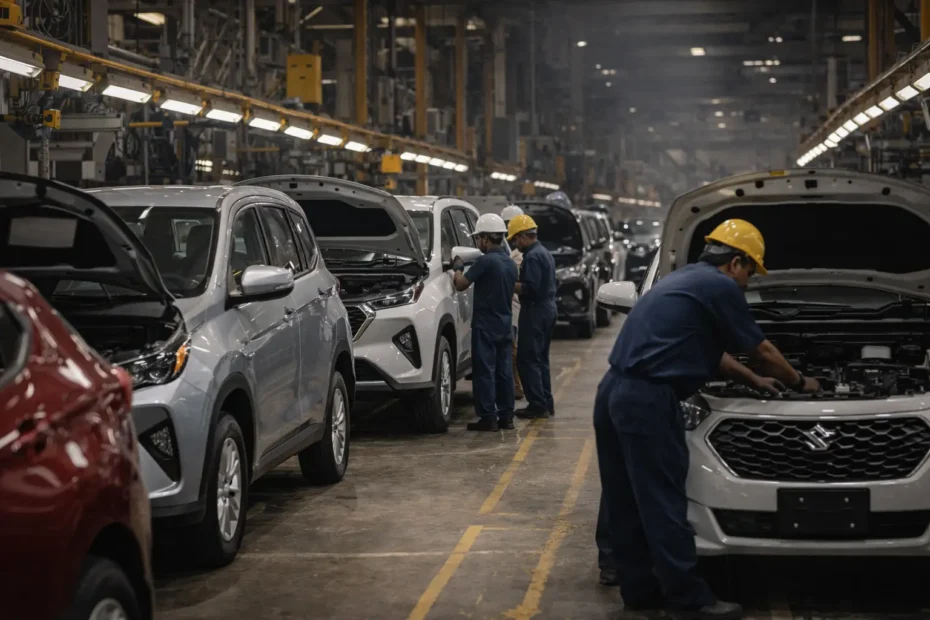
Pakistan’s automobile sector is finally showing signs of recovery after a prolonged downturn. Car sales are rising, production lines are active again, and financial performance is improving across major players.
However, despite this positive momentum, experts believe the recovery may not last long. The reason is simple: the industry’s core structural problems remain unresolved.
A Demand-Driven Recovery
The recent growth in the auto sector is largely driven by improving economic conditions.
After a period of high inflation and strict monetary policies, the situation has started to ease:
- Interest rates have declined, making car financing more accessible
- Inflation has moderated, improving purchasing power
- Consumer confidence is gradually returning
As a result, buyers who had delayed car purchases are now returning to the market. This release of pent-up demand has significantly boosted sales.
What Is Driving the Current Growth?
Several short-term factors are supporting the industry’s rebound:
1. Easier Auto Financing
Lower interest rates have reduced the cost of car loans, encouraging middle-income buyers.
2. Pent-Up Consumer Demand
Many households postponed purchases during the economic crisis. That demand is now being fulfilled.
3. Improved Production Levels
Automakers are operating at higher capacity after earlier supply chain disruptions.
4. Entry of New Brands
New entrants, particularly from China, are increasing competition and expanding consumer choice.
Sales Are Rising — But Margins Are Under Pressure
While sales volumes are improving, profitability is not growing at the same pace.
Automakers are facing:
- Higher distribution and operational costs
- Reduced margins in competitive pricing environments
- Limited growth in non-core income streams
This means that although companies are selling more vehicles, their financial health is not as strong as it appears on the surface.
Deep-Rooted Structural Issues Still Exist
The biggest concern is that Pakistan’s auto sector continues to operate on a weak structural foundation.
1. Dependence on Imported Components
A large portion of vehicle parts is still imported. This exposes the industry to:
- Exchange rate volatility
- Import restrictions
- Global supply disruptions
2. Limited Local Manufacturing Capability
Localisation remains low, especially for critical components like engines and advanced systems. This keeps production costs high.
3. Policy Uncertainty
Frequent changes in government policies create an unpredictable environment for investors and manufacturers.
4. Historically Limited Competition
Although new players are entering, the market has long been dominated by a few companies, reducing efficiency and innovation.
5. Lack of Long-Term Planning
There is limited progress on:
- Electric vehicle adoption
- Vehicle scrappage policies
- Sustainable industrial planning
Why This Growth May Be Temporary
The current recovery is largely cyclical rather than structural.
It is supported by temporary factors such as:
- Lower interest rates
- Improved economic stability
- Release of delayed demand
If these conditions change, the industry could once again face declining sales and production.
Without structural reforms, long-term sustainability remains uncertain.
Rising Competition Is Changing the Market
The entry of international automakers, especially Chinese brands, is reshaping the industry.
This is beneficial for consumers but creates challenges for existing players:
- Increased price competition
- Pressure on profit margins
- Need for better quality and innovation
The market is becoming more dynamic, but also more demanding.
What the Industry Needs for Sustainable Growth
To ensure long-term stability, several reforms are necessary:
Stronger Localisation
Develop domestic manufacturing of key components to reduce import dependence.
Consistent Policy Framework
Provide long-term clarity to attract investment and support industry planning.
Electric Vehicle Strategy
Prepare for the global shift toward EVs with clear policies and incentives.
Improved Financing Access
Maintain affordable financing options to support consumer demand.
Encouraging Fair Competition
Create a level playing field for both existing and new entrants.
Final Thoughts
Pakistan’s auto industry is clearly on a recovery path, and the current growth phase is encouraging.
However, this progress is built on temporary factors rather than strong structural foundations.
Unless long-standing issues are addressed, the industry risks slipping back into instability.
In simple terms: the recovery is real, but it may not be durable.