The Khyber Pakhtunkhwa government has formally declined to grant ad-hoc regularization to approximately 2,000 lecturers serving in government colleges across the province, upholding its policy that all future teaching appointments must proceed exclusively through the Khyber Pakhtunkhwa Public Service Commission. The refusal arrives days after the KP Assembly passed an emergency resolution on April 13 flagging that lecturers appointed under a project for newly established colleges had gone without salaries for several months — underscoring a deepening administrative and financial crisis in the province’s higher education sector.
The KP government’s refusal to grant ad-hoc status to the approximately 2,000 lecturers flows directly from a policy position formalised in December 2025. The Khyber Pakhtunkhwa government decided to stop hiring lecturers on an ad hoc basis and will recruit all future teaching staff through the Public Service Commission. The decision was made during a meeting of the KP Assembly’s Standing Committee on Higher Education, chaired by MPA Anwar Khan.
The government’s argument is principled: ad-hoc appointments bypass competitive merit processes, create vested interests in subsequent regularisation drives, and violate the Pakistan Civil Services Rules’ provision that ad-hoc appointments cannot exceed one year in duration. The KP PSC Advertisement No. 05/2022 for lecturer positions remains active — with ability test schedules being issued as recently as April 2026 — demonstrating that the government views KPPSC as the legitimate and only route for lecturer induction.
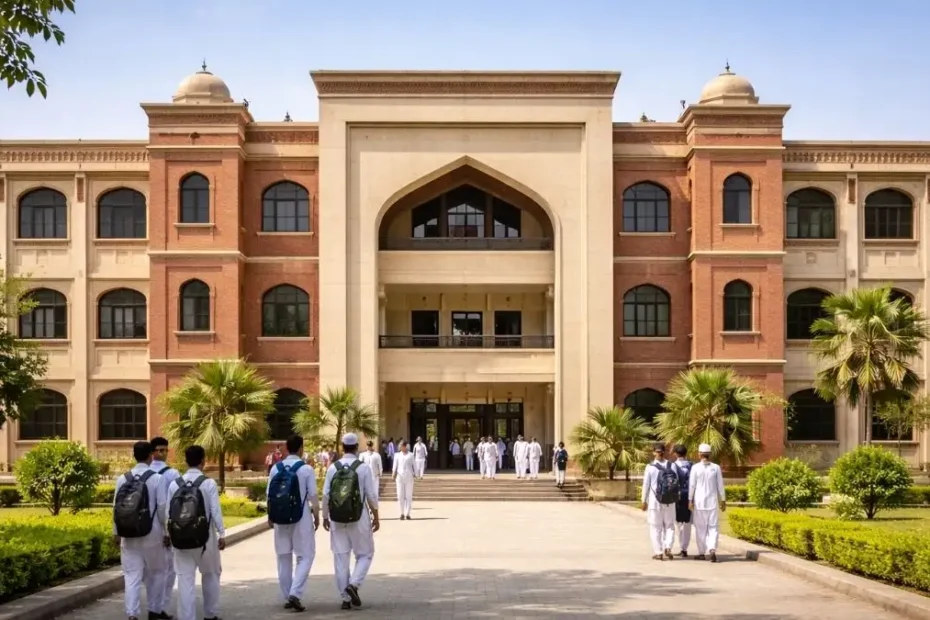
The lecturers at the centre of this dispute were appointed under project mode — specifically under the KP Higher Education Department’s initiative to staff “newly constructed and established colleges” across the province. KP has been expanding its college network significantly, particularly into merged tribal districts and remote areas like Bajaur, Upper Chitral, Upper Dir, and Takht Bhai, where higher education access has historically been minimal.
Project-mode appointments are technically temporary, tied to specific PC-1 (project cost) financing and not governed by standard civil service regularisation rules. The approximately 2,000 lecturers appointed under these project approvals have been working in colleges — in many cases for years — and are now seeking conversion of their status to regular or ad-hoc civil service posts, which would provide permanent employment protection, regular pay scales, and a pathway to eventual regularization.
The government has refused this conversion, maintaining that the only legitimate path to a regular lecturer post in KP’s government colleges is through a competitive KPPSC process.
The lecturers’ situation is compounded by a parallel financial failure. The Khyber Pakhtunkhwa Assembly passed a resolution expressing serious concern over financial and administrative issues faced by lecturers and staff appointed under the project for higher education functionaries in newly established colleges. The resolution, moved by MPA Dawood Shah, highlighted that young lecturers and other employees under the project have not received their salaries for several months, leaving them in severe financial distress. It further said that the revision of PC-1 has been delayed within the Planning and Development (P&D) Department, exacerbating the situation. The resolution called for the matter to be urgently presented before the Provincial Development Working Party (PDWP) to secure approval for the PC-1 revision, which would pave the way for the release of pending salaries.
The salary non-payment is a direct consequence of the structural ambiguity: project-mode lecturers are funded through project budgets rather than regular salary heads, and when a PC-1 lapses or its revision stalls in the P&D process, the salary pipeline breaks entirely. These are not employees who can be moved to regular pay heads without precisely the regularization that the government has now declined to grant.
The government’s insistence on PSC-based hiring reflects a genuine institutional reform principle — ad-hoc appointment followed by political regularization has been one of the most persistent and damaging practices in Pakistan’s civil service, creating a permanent class of employees who entered service outside merit processes and then used political pressure or court orders to secure permanent status. The KP Standing Committee noted in December 2025 that 208 lecturers appointed since 2014 would be regularised through a specific legislative bill — but only those who met the criteria, not all ad-hoc appointments wholesale.
The human cost of the policy, however, is stark: approximately 2,000 educated individuals — many of them young postgraduates who took project appointments in good faith — are currently without salaries, without regularization, and without a clear legal status. They cannot be appointed through KPPSC retroactively; they cannot be regularised without the government’s agreement; and they cannot be removed without legal process. The KP Assembly resolution suggests that even elected members of the ruling party recognise the urgency of at least resolving the salary component — even if the broader question of permanent status remains unresolved.
KP’s budget is under significant federal pressure in CY2026. Under Pakistan’s IMF programme, KP has committed to delivering a Rs 220 billion provincial surplus to the federal consolidated fund. Creating approximately 2,000 new regular civil service posts — with full pay scales, allowances, pension liabilities, and incremental progression — would impose a substantial permanent fiscal commitment that the province’s constrained budget cannot accommodate without displacing other expenditure priorities. The IMF’s focus on provincial fiscal discipline thus creates a structural disincentive for regularisation even when the human argument for it is compelling.
The approximately 2,000 lecturers have limited formal recourse. Court petitions challenging the refusal of ad-hoc status are likely — KP courts have historically been receptive to civil servant regularisation petitions, and the Peshawar High Court’s jurisprudence on employment rights is reasonably well-developed. The PDWP process for PC-1 revision, if completed, would at minimum release the stalled salary arrears — providing immediate financial relief without resolving the long-term status question. The KP Assembly’s April 13 resolution, while non-binding, signals legislative discomfort with the current impasse and may create political pressure on the Higher Education Department to find an interim solution.
For students in the newly established colleges these lecturers serve, the prolonged crisis carries a direct educational cost: institutions operating with financially stressed, legally uncertain faculty are unlikely to deliver the quality of higher education that KP’s expanding college network was designed to provide.