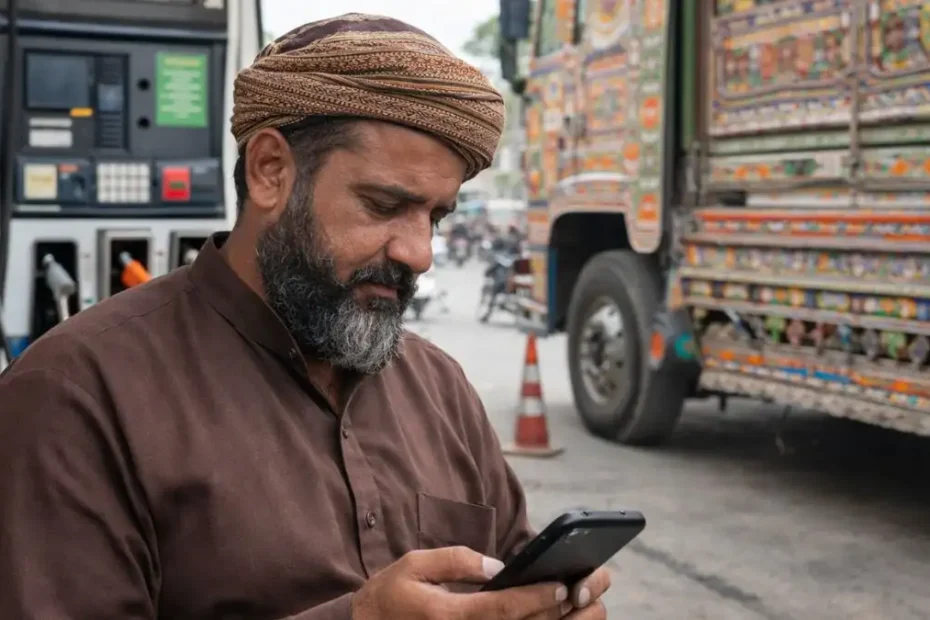
Easypaisa digital bank disbursed Rs 1.2 billion to over 32,000 transport operators on Saturday in the first live batch of PM Shehbaz Sharif’s Fuel Package 2026, making it the first digital wallet platform to execute government-to-person (G2P) fuel subsidy payments in Pakistan’s history. The disbursement covers owners and operators of buses, trucks, long-haul vehicles, and delivery vans — arriving days after Pakistan recorded its largest-ever single-day fuel price increase on 3 April 2026.
Under the initiative, easypaisa disbursed Rs 1.2 billion to over 32,000 beneficiaries, including operators of buses, trucks, long-haul vehicles, and delivery vans. Easypaisa is the first digital wallet to facilitate the transfer of the first batch to trucks. This will be followed by tank lorries, buses, and motorcycles.
To control the rise in prices of essential food items, trucks received Rs 70,000, large freight vehicles received Rs 80,000, and delivery vans received Rs 35,000 per month as a subsidy.
| Vehicle Type | Monthly Subsidy |
|---|---|
| Small trucks (food items) | Rs 70,000 |
| Large freight vehicles | Rs 80,000 |
| Public transport buses | Rs 100,000 |
| Delivery vans | Rs 35,000 |
Source: PM Office statement, 5 April 2026.
Data on eligible vehicles was collected from provincial excise departments and shared with the State Bank of Pakistan to facilitate direct digital payments. Federal IT Minister Shaza Fatima Khawaja said only registered vehicles qualify, making proper documentation essential for transporters seeking to benefit from the scheme.
Subsidy distribution, originally planned for Monday, began on Saturday following the prime minister’s special instructions, after provincial governments shared verified data of transport vehicles with federal authorities.
Easypaisa’s role extends beyond payment execution. Through its mobile wallet ecosystem, easypaisa facilitates real-time transfers directly to beneficiaries, allowing recipients to withdraw funds, pay bills, or make purchases digitally. The platform has over 59 million registered users and a widespread agent network across urban and rural areas.
PM Shehbaz Sharif said: “The provision of relief funds to public transport and goods-carrying vehicle owners through digital wallets has been initiated. An effective and transparent system has been introduced to transfer subsidies digitally to buses, wagons, and goods transport vehicles.”
Jahanzeb Khan, President & CEO of easypaisa digital bank, said: “We are honored to partner with the Government of Pakistan in delivering timely financial relief to citizens. Our mission has always been to relentlessly simplify and secure access to financial services, unlocking opportunities and empowering all Pakistanis. This initiative reflects the impact digital banks can have in driving efficiency and transparency in public welfare programs.”
Federal Minister for IT and Telecommunication Shaza Fatima Khawaja said digital payments are a key pillar of Pakistan’s modern financial system and a critical tool for ensuring subsidies reach deserving recipients without leakage.
Provinces are pooling approximately Rs 200 billion for three months on the pattern of their National Finance Commission (NFC) shares — roughly Rs 100 billion from Punjab, Rs 51–52 billion from Sindh, Rs 15 billion from Khyber Pakhtunkhwa, and Rs 8–9 billion from Balochistan. PM Shehbaz lauded Balochistan Chief Minister Sarfaraz Bugti for disbursing the provincial share in the austerity package, and urged other provinces to expedite their contributions.
The government has provided a public relief package worth Rs 129 billion over the past three weeks. Pakistan Railways is running on a Rs 6 billion subsidy to prevent fare increases for passenger and freight services, and the 25% quarterly increase in toll tax has been reversed.
The 32,000 transporters represent the first wave. The truck disbursement will be followed by tank lorries, buses, and motorcycles in subsequent batches.
Motorcyclists — over 30 million registered in Pakistan — will receive a Rs 100 per litre subsidy on up to 20 litres per month (Rs 2,000 maximum monthly benefit) through a separate digital delivery mechanism still in final testing at the Pakistan Digital Authority. The federal petrol subsidy app had not officially launched publicly as of 8 April 2026.
Pakistan’s 32,000 initial beneficiaries are the operators whose diesel bills directly set the cost of moving food, medicines, construction materials, and industrial inputs across the country. The real success of the scheme will depend on whether the subsidies translate into stable freight charges and passenger fares, rather than simply being absorbed as operator income in a market where diesel costs Rs 520.35 per litre.
For a daily-wage consumer in Lahore or Karachi, whether this Rs 1.2 billion disbursement actually moderates vegetable prices, flour transport costs, and bus fares in the coming weeks will determine the programme’s real-world impact — not the headline transfer figure.
Mere Naam per Ek shahzur gadi hai aur Mujhe fuel subsidy ki aur Mujhe fuel subsidy Ki rakam Nahin Mili Agar pm Sahab Mujhe rakam Dena Chahte Hain To Mera easy paisa account number 0345 750 7714 hai Meherbani gari no cbe 8373
muje b fuel k 3200 ni mely h
Mera number 03111512997
I don’t Receive A Payment of Truck relief gltb 2026 In my easypaissa Account about 35000 Pkr
میرے پاس یو نو ڈیڈرو مزدا 300 ہے ابھی تک فیول سبسڈی مجھے نہیں ملی