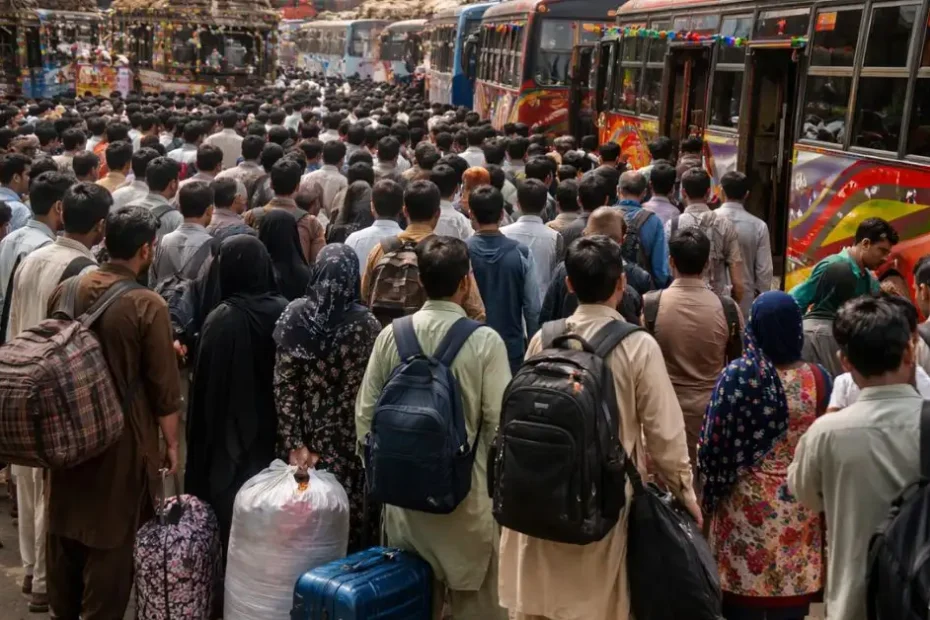
Pakistan’s entire transport sector raised fares within hours of Thursday’s record fuel price hike, with the Pakistan Goods Transport Alliance announcing a 60% increase in freight rates on 3 April 2026 and intercity bus operators, rickshaw drivers, and ride services following with hikes ranging from 30% to 65%. The cascading cost impact arrives as diesel — the backbone of Pakistan’s freight economy — hit Rs 520.35 per litre, its highest price in history, with high-speed diesel up Rs 184.49 per litre or 55% in a single revision.
Pakistan Goods Transport Alliance President Malik Shahzad announced a 60% increase in transport fares following the government’s fuel price hike. He condemned the rise in fuel costs, warning it could trigger a nationwide wave of inflation, and added that without fare revision, the country’s transport system could come to a halt.
Before the formal announcement, goods transporters convened an emergency joint meeting. Transport sector representatives said the situation had already begun to affect import and export cargo operations at Pakistan’s ports, putting strain on loading and delivery systems.
Freight charges from Karachi to Rawalpindi surged from Rs 0.26 million to Rs 0.89 million within a month. Transport costs from wholesale markets in Faisalabad and Sargodha increased by 200%.
The scale of these increases means businesses importing raw materials from Karachi and shipping to upcountry markets now pay more than three times the freight cost compared to pre-crisis rates. Textile mills, pharmaceutical distributors, FMCG companies, and construction material suppliers all face this structural cost jump with no immediate reversal in sight.
Proposals forwarded to the Punjab Transport Department include a 25% increase in local non-AC fares, 30% for local AC transport, 37% for intercity AC services, and 32% for intercity non-AC services. A 35% increase in goods transport fares was also agreed upon. Officials stated that any fare increase will only take effect after approval from the competent authority.
Local fares for Qingqi rickshaws rose from Rs 30 to Rs 50. Fares from Raja Bazaar to District Courts now stand at Rs 60 and up to Rs 200 for suburban areas. Pick-and-drop charges for students increased from Rs 2,000 to Rs 2,600 per month. Motorcycle ride services raised fares from Rs 100 to Rs 150 and from Rs 200 to Rs 250.
Rickshaw drivers report fare increases ranging from 30% to 40%, citing the sharp rise in fuel costs as an unavoidable factor, saying operating at previous rates is no longer financially viable.
In Karachi, the minimum bus fare jumped from Rs 30 to Rs 50, with a maximum of Rs 100. The Lahore to Rawalpindi executive bus fare rose from Rs 2,250 to Rs 2,480. Executive Plus went from Rs 3,350 to Rs 3,680. Lahore to Murree climbed from Rs 3,100 to Rs 3,720. Lahore to Karachi increased by Rs 3,000, reaching Rs 13,200 on some services.
Transport terminals in Rawalpindi and Islamabad cancelled advance bookings for Eid travel on routes including Lahore, Multan, Karachi, Hyderabad, Sukkur, Kohat, Bannu, and Sialkot, and started demanding higher fares. Goods transport charges for Azad Kashmir, Jhelum, Chakwal, Attock, and Murree rose 35%.
The government’s targeted subsidy package announced alongside Thursday’s hike includes direct monthly cash transfers for freight operators — Rs 70,000 per month for small trucks carrying food items, Rs 80,000 for large transport vehicles, and Rs 100,000 for intercity public service buses. Whether these amounts cover the actual rise in operating costs at Rs 520.35/litre diesel is another matter.
Punjab Chief Minister Maryam Nawaz Sharif announced free public transport for all passengers across every city in the province, covering the Orange Line Metro in Lahore, Metro Bus services, Speedo buses, and Green Electric Buses. Separately, Federal Interior Minister Mohsin Naqvi announced all public transport in Islamabad will be free for 30 days starting 4 April, with the Ministry of Interior covering the Rs 350 million cost.
Pakistan Railways confirmed passenger and freight train fares will remain unchanged until 30 June, following a directive from Prime Minister Shehbaz Sharif.
The Pakistan Public Transport Owner Association held an emergency meeting on Thursday. Representatives stated that fare adjustments cannot match the surge in diesel prices and warned that, if forced, transporters may suspend operations entirely.
The Regional Transport Authority and district administration in Rawalpindi initiated consultations with transport unions and bus stand owners to stabilise fares, with all proposed increases forwarded to the Punjab Transport Department for formal approval.
Diesel at Rs 520.35 per litre powers trucks carrying flour from mills to markets, vegetable carts from Sabzi Mandis to retail shops, medicine deliveries, and construction materials. A 60% freight rate increase does not stay in the logistics sector — it feeds directly into shop prices within days. For a daily-wage worker commuting in a rickshaw in Rawalpindi, the fare from Rs 30 to Rs 50 represents a 67% increase in daily transport spending. For a student on a pick-and-drop service, the monthly Rs 600 increase compounds with rising food bills and utility costs. Pakistan’s headline inflation stood at 7.3% in March 2026 — analysts at SBP and the IMF both warn the second quarter could see it climb toward 9–10% as these freight and fare increases fully pass through to retail prices.