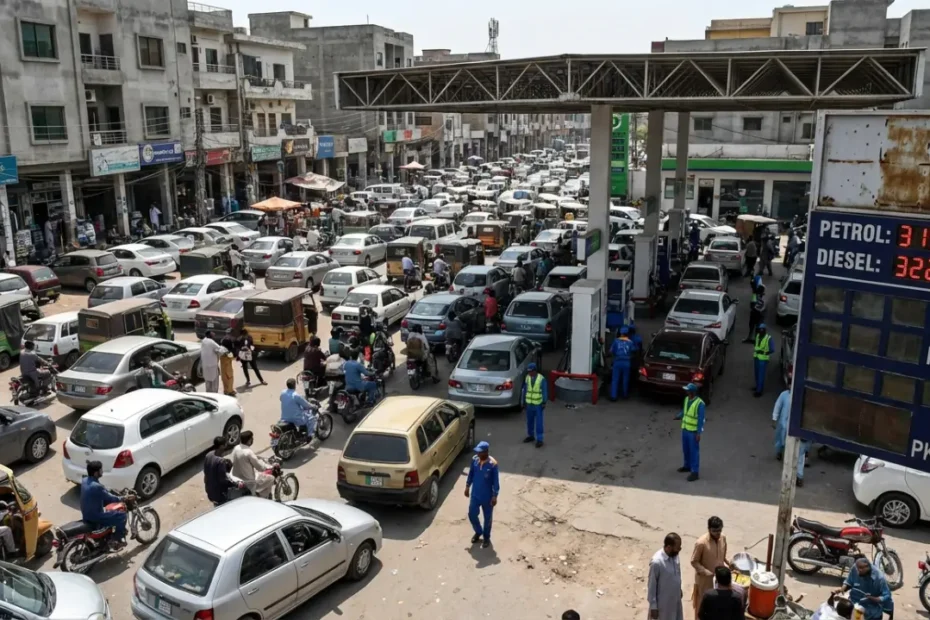
Pakistan formally assured the International Monetary Fund it will pass on global oil price increases to consumers and temporarily suspend the Federal Excise Duty increase on fertilisers and pesticides, according to commitments recorded in the government’s Memorandum of Economic and Financial Policies (MEFP). The commitments arrive as March 2026 inflation breached the SBP’s target band, jumping to 7.3% year-on-year — its highest reading since August 2024.
What Pakistan Committed to the IMF
Under commitments outlined in the government’s MEFP, Islamabad agreed to pass on changes in global oil prices to consumers, provide targeted subsidies to protect vulnerable groups, and delay the planned increase in Federal Excise Duty on fertilisers and pesticides.
Pakistani authorities also conceded to the IMF that the government established a Prime Minister’s Austerity Fund, slashed the PSDP by Rs 100 billion, and saved Rs 27 billion through a reduction of fuel allowances and a 20% cut in non-salary expenditures — but told the Fund that such support measures could only be temporary and that regular adjustment in fuel prices plays a crucial role in helping curtail fuel demand.
BISP Kafaalat Stipend Rises to Rs 19,500 from January 2027
The monthly stipend under the flagship Kafaalat programme will rise to Rs 19,500 from Rs 14,500 starting January 2027, following an expansion in programme coverage and budget allocations planned for FY2027.
The Rs 5,000-per-month increase — a 34.5% jump in the cash transfer — forms a new structural benchmark under the IMF programme, directly linked to the government’s commitment to absorb the social cost of market-based fuel pricing.
To further strengthen social protection, authorities plan to expand unconditional cash transfers by adding approximately 200,000 households to BISP by the end of FY2026, bringing total enrolment to roughly 10.2 million families.
| BISP Kafaalat | Current | From January 2027 |
|---|---|---|
| Monthly Stipend | Rs 14,500 | Rs 19,500 |
| Programme Coverage | ~10 million families | ~10.2 million families |
| Change | — | +Rs 5,000 (+34.5%) |
The government is also upgrading payment systems for BISP beneficiaries, including the rollout of digital wallets for approximately 7 million households, with full coverage targeted by the end of FY2026 — an initiative implemented in coordination with the State Bank of Pakistan to improve transparency and efficiency in benefit disbursement.
Enrolment in conditional cash transfer programmes covering education, health, and nutrition is also set to increase, including a planned expansion of the Taleemi and Nashonuma initiatives and the introduction of a new skills-focused programme
The Inflation Reality Behind the Commitment
Pakistan’s consumer price index rose to 7.3% year-on-year in March 2026, up from 6.98% in February and a mere 0.7% a year earlier — the steepest reading since August 2024 and the first breach of the SBP’s 5–7% target band in months.
Transport costs led the surge, skyrocketing to 12.5% year-on-year from just 0.4% the previous month, while housing and utilities climbed to 11.5% from 9.7%, driven by double-digit fuel price increases, scrapped electricity cross-subsidies, and newly imposed fixed charges. The Wholesale Price Index leapt to 6.7% from just 1.0% the prior month, signalling that producer cost pressures have yet to fully feed through to retail prices.
Fuel Levy Tension — PM Seeks IMF Flexibility
Even as the MEFP commits to full price pass-through, Prime Minister Shehbaz Sharif separately directed the Finance Division to explore whether any required increase in domestic fuel prices could be offset through changes in existing petroleum levies, which currently stand at approximately Rs 100 per litre on petrol and Rs 55 per litre on diesel.
The move came after the government absorbed a subsidy burden of nearly Rs 129 billion to keep fuel prices stable for consumers — a position the IMF’s MEFP framework explicitly characterises as unsustainable.
The tension between the two positions — full pass-through committed in the MEFP versus levy rationalisation being explored by the PM’s office — reflects the political difficulty of implementing market-based fuel pricing during a geopolitical price shock.
For Pakistani households, the MEFP commitments deliver a clear message: petrol and diesel prices will continue to move with global markets. With Brent crude elevated above $100 per barrel due to Middle East conflict disruptions, consumers should expect fuel prices to remain under upward pressure through Q4 FY26. The BISP stipend increase to Rs 19,500 per month from January 2027 targets the bottom income decile — it offers no relief to the salaried middle class or small businesses absorbing higher transport and logistics costs today. For exporters, the combination of elevated fuel prices and a potential SBP policy rate response to inflation above the 7% band adds two simultaneous cost pressures to an already compressed margin environment.